7 Hidden Lifestyle Habits That Cause Stubborn Belly Fat (And How to Fix Them Fast)

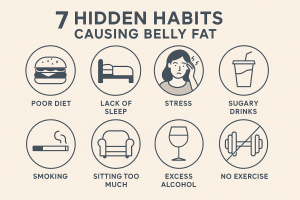
7 Hidden Lifestyle Habits That Cause Stubborn Belly Fat

If you’ve been eating right and exercising but your belly fat refuses to budge — it’s not your fault. The truth is, stubborn belly fat is often caused by hidden everyday habits that disrupt your hormones, metabolism, and fat-burning potential.

In this guide, we’ll uncover 7 sneaky habits that silently add inches to your waistline — and how to reverse them for good.


Why Belly Fat Is So Stubborn

7 Hidden Lifestyle Habits That Cause Stubborn Belly Fat

Unlike other types of body fat, belly fat is hormonally active, meaning it reacts strongly to stress, sleep, and diet.
There are two main kinds:

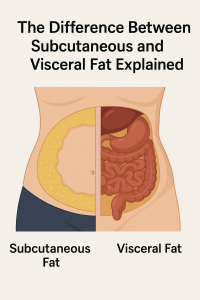
  • Subcutaneous fat – found just under your skin (soft and pinchable).

  • Visceral fat – surrounds your organs and is linked to inflammation, insulin resistance, and metabolic diseases.

Visceral fat is harder to lose because it’s tied to hormonal imbalances, particularly elevated cortisol and insulin.


1. Chronic Stress and Elevated Cortisol

Why Stress Targets Your Belly

When you’re stressed, your adrenal glands release cortisol, your body’s “fight-or-flight” hormone. Chronically high cortisol increases appetite and tells your body to store fat — especially around your midsection.

Research from the Endocrine Society shows that people with higher cortisol levels tend to have larger waistlines even if their overall weight is normal.

Simple Stress Management Fixes

  • Practice deep breathing for 5–10 minutes daily.

  • Try yoga, meditation, or tai chi to calm cortisol.

  • Get regular sunlight and walk outdoors to reset stress hormones.


2. Poor Sleep Quality and Irregular Schedule

Sleep, Hormones, and Belly Fat

When you skimp on sleep, ghrelin (hunger hormone) increases while leptin (fullness hormone) decreases.
This means you crave sugar and carbs while your metabolism slows — the perfect recipe for fat storage.

How to Improve Sleep Hygiene

  • Stick to a consistent bedtime, even on weekends.

  • Avoid screens 1 hour before bed.

  • Keep your room cool, dark, and quiet.

  • Try magnesium or herbal tea before sleep.


3. Too Much Sitting (Sedentary Lifestyle)

The Science of “Sitting Disease”

Long hours at your desk or couch reduce NEAT (non-exercise activity thermogenesis) — the calories burned during daily movement.

Low NEAT leads to:

  • Sluggish metabolism

  • Lower calorie burn

  • Increased insulin resistance

Daily Movement Hacks

  • Stand up or stretch every 30 minutes.

  • Walk 10,000 steps per day.

  • Use stairs instead of elevators.

  • Try “desk workouts” with bands or mini squats.


4. Skipping Meals or Extreme Dieting

Metabolic Slowdown Explained

When you skip meals or eat too little, your body goes into energy conservation mode — slowing metabolism and increasing fat storage.

Restrictive diets also raise cortisol, creating a hormonal environment that promotes belly fat.

Balanced Eating for Fat Loss

  • Eat 3–4 small, balanced meals daily.

  • Include lean protein, healthy fats, and complex carbs at every meal.

  • Don’t fear calories — fuel your metabolism, don’t starve it.


5. Excess Sugar and Processed Foods

Insulin and Fat Storage

Processed foods cause insulin spikes, which prevent your body from burning stored fat. Over time, this leads to insulin resistance, where fat accumulates primarily around the belly.

Smarter Swaps for Cravings

  • Replace sugary drinks with sparkling water and lemon.

  • Choose whole grains over refined carbs.

  • Snack on fruit, nuts, or Greek yogurt instead of chips or candy.


6. Lack of Strength Training

Muscle and Metabolic Rate Connection

Muscle is your metabolic engine — it burns calories even when you’re resting.
Without strength training, your muscle mass decreases, lowering your daily calorie burn and making belly fat harder to lose.

Easy Resistance Workouts

  • Do 20–30 minutes of bodyweight exercises (squats, planks, pushups).

  • Use resistance bands or dumbbells 3–4 times a week.

  • Combine HIIT + strength for maximum fat-burning effect.


7. Chronic Dehydration and Poor Nutrition Timing

Why Water Matters for Fat Burning

Water is essential for metabolism — even mild dehydration can reduce fat-burning efficiency by up to 3%.
It also helps control appetite and flushes out metabolic waste.

Optimal Meal Timing

Eating irregularly or too late at night disrupts insulin and fat metabolism.

  • Eat most of your calories earlier in the day.

  • Finish dinner 3 hours before bed.

  • Stay hydrated between meals, not during heavy eating periods.


Bonus: Hormonal Imbalance and Age
7 Hidden Lifestyle Habits That Cause Stubborn Belly Fat

As you age, hormones like estrogen, progesterone, and testosterone fluctuate, slowing metabolism and altering fat distribution.
To counteract this:

  • Prioritize strength training.

  • Maintain adequate sleep and stress balance.

  • Include foods rich in omega-3s, magnesium, and vitamin D.


FAQs on Lifestyle Habits and Belly Fat

1. Can stress alone cause belly fat?
Yes, chronic stress raises cortisol, which promotes abdominal fat storage even without overeating.

2. Is belly fat harder to lose as you age?
Yes. Muscle loss, hormonal shifts, and slower metabolism make it more stubborn, especially after 40.

3. Does skipping breakfast help burn belly fat?
Not usually. For most women, skipping breakfast raises cortisol and slows metabolism.

4. How much exercise do I need to lose belly fat?
At least 150 minutes of activity per week, combining cardio and strength.

5. Can you target belly fat specifically?
No, but you can reduce overall body fat through a calorie deficit and stress control.

6. What’s the #1 mistake people make when trying to lose belly fat?
Over-focusing on exercise while ignoring sleep, stress, and nutrition balance.


Conclusion: Small Habit Changes, Big Fat Loss Results

Belly fat doesn’t just come from food — it’s the result of daily lifestyle choices that affect hormones, metabolism, and stress.

By addressing these seven hidden habits, you can finally break the cycle of stubborn belly fat and restore balance to your body.

Start small — manage stress, move more, eat mindfully, and sleep deeply. Within weeks, your body will respond with renewed energy and a slimmer, stronger core.

👉 For more research-backed tips, visit Harvard Health – The Truth About Belly Fat.

How Long Does It Really Take to Lose Belly Fat (Science-Backed 2025 Guide)

How Long Does It Really Take to Lose Belly Fat

If you’ve ever looked in the mirror and wondered, “Why won’t this belly fat go away?” — you’re not alone. Millions of people struggle with abdominal fat because it’s the most stubborn and hormonally influenced fat on the body.

The truth? Losing belly fat takes time — not weeks, but often months of consistent effort. Let’s explore how long it really takes to shed belly fat, what affects the process, and what you can do to make it faster and healthier.


Understanding Belly Fat: The Science Behind It

How Long Does It Really Take to Lose Belly Fat

Belly fat isn’t just about looks — it’s about health. Excess fat around your midsection increases the risk of heart disease, diabetes, and hormonal imbalances.

The Two Types of Belly Fat

  1. Subcutaneous fat – The soft, pinchable fat just under your skin.

  2. Visceral fat – The deep fat that surrounds your organs; it’s metabolically active and dangerous in excess.

Why Belly Fat Is the Hardest to Lose

  • It’s hormonally protected by cortisol and insulin.

  • The abdominal area has fewer fat-burning receptors than other parts of the body.

  • Stress, poor sleep, and genetics can make it accumulate faster and burn slower.


The Truth About Fat Loss Timing

The Role of Caloric Deficit

To lose fat, your body must burn more calories than it consumes — a concept called a caloric deficit. This triggers your body to convert stored fat into energy.

However, too large a deficit can backfire by slowing metabolism and increasing muscle loss.

Average Fat Loss Rate Per Week

A healthy fat loss rate is 1–2 pounds per week, depending on your starting point, age, and hormones. Losing faster often means you’re losing water or muscle, not fat.


How Long Does It Take to Lose Belly Fat? (Realistic Timeline)

Losing belly fat takes time — not weeks, but often months of consistent effort. Let’s explore how long it really takes to shed belly fat, what affects the process, and what you can do to make it faster and healthier.
Losing belly fat takes time

Let’s break it down based on consistency, diet, and exercise habits.

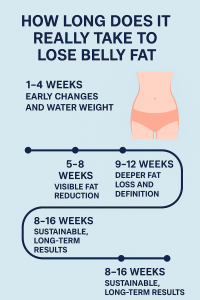
Weeks 1–4: Early Changes and Water Weight

  • You’ll notice less bloating and water retention.

  • Energy and mood improve with cleaner eating and movement.

  • Scale weight may drop, but belly fat remains largely unchanged — yet.

Weeks 5–8: Visible Fat Reduction

  • Waist circumference begins to shrink.

  • Clothes fit better, posture improves, and visceral fat starts to burn.

  • Your body is now adapting to your new lifestyle.

Weeks 9–12: Deeper Fat Loss and Definition

  • The midsection becomes firmer as visceral fat decreases significantly.

  • You may see the first signs of muscle definition.

  • Consistency in nutrition and strength training pays off here.

3–6 Months: Sustainable, Long-Term Results

  • For most people, visible belly fat reduction happens within this range.

  • At this point, hormonal balance and muscle gain sustain your results.

  • The key: patience and habit consistency.

Summary:

💡 Realistic belly fat loss timeline: 8–16 weeks for visible results, 3–6 months for major transformation.


Factors That Influence How Fast You Lose Belly Fat

Gender and Hormones

Women have more estrogen, which encourages fat storage around the hips and belly. Men, on the other hand, accumulate visceral fat faster but also lose it faster due to higher muscle mass.

Age and Metabolism

After 30, muscle mass decreases by 3–8% per decade, slowing your metabolism. This makes fat loss slower, but not impossible — strength training can reverse this trend.

Stress, Cortisol, and Belly Fat

Cortisol — your stress hormone — signals your body to store fat around the midsection. Chronic stress, poor sleep, and emotional eating all raise cortisol, making belly fat resistant to change.


Proven Strategies to Lose Belly Fat Effectively

Nutrition: Eat for Fat Loss, Not Starvation

  • Focus on whole, unprocessed foods: lean proteins, fiber, and healthy fats.

  • Avoid added sugars and refined carbs — they spike insulin and promote fat storage.

  • Try the 80/20 rule: eat nutrient-dense meals 80% of the time and indulge moderately 20%.

💡 Tip: Protein-rich diets boost metabolism by up to 15%, helping your body burn fat more efficiently.


Exercise: What Works and What Doesn’t

  • Strength training builds lean muscle, increasing calorie burn even at rest.

  • Cardio (brisk walking, cycling, swimming) burns stored fat.

  • HIIT (High-Intensity Interval Training) is proven to reduce visceral fat faster than steady cardio.

  • Skip endless crunches — you can’t spot-reduce belly fat, but you can strengthen your core.


Lifestyle Habits That Accelerate Results

  • Sleep: Aim for 7–9 hours nightly. Poor sleep increases cravings and slows metabolism.

  • Hydration: Water aids fat metabolism; dehydration stalls fat loss.

  • Stress management: Meditation, yoga, and mindful breathing lower cortisol naturally.


Common Myths About Belly Fat Loss

Myth Truth
You can lose belly fat in 2 weeks True fat loss takes at least 8–12 weeks of consistency.
Crunches burn belly fat They strengthen muscles but don’t target fat.
Skipping meals speeds up fat loss It slows metabolism and raises cortisol.
Supplements can melt fat No pill replaces consistent diet and exercise.
You need to do hours of cardio 30–45 minutes of focused activity is enough with good nutrition.

FAQs About Belly Fat Loss Timeline

1. How long does it take to lose belly fat for women?
Typically, 8–12 weeks for visible reduction, but hormonal factors may extend that timeline slightly.

2. How long does it take for men to lose belly fat?
Men often see results in 6–10 weeks, as they generally burn fat faster due to muscle density.

3. Can I lose belly fat without exercise?
Yes, through diet alone — but progress is slower, and maintaining muscle is harder.

4. What’s the fastest way to lose belly fat safely?
Combine strength training, high-protein diet, and stress management.

5. How do I know I’m losing belly fat?
Track waist measurements, progress photos, and how your clothes fit — not just the scale.

6. Can stress really stop fat loss?
Yes. Elevated cortisol promotes fat storage even if you’re eating in a deficit.


Conclusion: The Realistic Road to a Flat Stomach

There’s no magic shortcut — belly fat loss is a gradual, biological process that rewards consistency.

If you eat well, exercise smart, sleep deeply, and manage stress, you’ll see meaningful results in as little as 8–12 weeks, and lasting transformation within 3–6 months.

Remember: your goal isn’t perfection — it’s progress. Focus on building healthy habits, and the flat stomach will follow naturally.

👉 Learn more from Harvard Health – The Truth About Belly Fat.

Female Metabolism: How It Changes With Age and Weight Loss (2025 Science-Backed Guide)

Female Metabolism: How It Changes With Age and Weight Loss

Metabolism is one of the most misunderstood parts of women’s health. Many women in their 30s, 40s, or 50s notice that weight loss becomes harder, energy levels drop, and their bodies respond differently to food and exercise.

Female Metabolism: How It Changes With Age and Weight Loss

The reason isn’t just “getting older” — it’s a combination of hormonal changes, muscle loss, and metabolic adaptation unique to women. Let’s dive into how female metabolism changes with age and weight loss, and how you can keep it strong at every stage of life.


What Is Metabolism and Why It Matters for Women

How Metabolism Works in the Female Body

Metabolism refers to the chemical processes your body uses to convert food into energy. It determines how efficiently your body burns calories at rest — known as Basal Metabolic Rate (BMR).

For women, metabolism is closely linked to hormones, reproductive health, and muscle mass. These factors shift dramatically with age, leading to slower fat burning and easier fat storage, especially around the belly and hips.


The Unique Metabolic Traits of Women

The Role of Estrogen and Progesterone

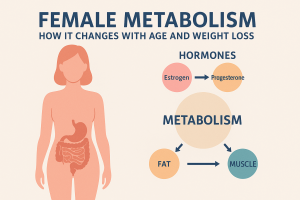
Estrogen supports lean muscle and fat distribution in the hips and thighs, while progesterone helps regulate appetite and mood. When these hormones fluctuate — during menstruation, pregnancy, or menopause — your metabolic rate can rise or fall temporarily.

Why Women Store Fat Differently Than Men

Women naturally have more body fat than men for reproductive and hormonal balance. This extra fat acts as a backup source of energy during pregnancy or periods of stress, but it also makes fat loss more challenging — especially post-40.


How Female Metabolism Changes With Age

In Your 20s: Building Metabolic Foundation 

Female Metabolism: How It Changes With Age and Weight Loss
Female Metabolism: How It Changes

Your 20s are your metabolic peak. Hormones, energy, and muscle mass are at their highest, making it easier to maintain or lose weight. However, poor diet or overtraining can disrupt thyroid function early on.

In Your 30s: Subtle Slowdown Begins

In your 30s, muscle mass starts to decline if you’re not strength training. Busy careers, motherhood, and stress can elevate cortisol — a hormone that encourages fat storage around the belly.

In Your 40s and 50s: Menopause and Metabolic Drop

During perimenopause and menopause, estrogen levels plummet, leading to reduced muscle, lower calorie burn, and a slower metabolism. Fat redistributes from the thighs and hips to the abdomen, creating the notorious “menopause belly.”

After 60: Slower Digestion and Recovery

As muscle declines further and digestion slows, calorie needs decrease. But metabolism doesn’t stop — it just becomes more sensitive to food choices and movement.


Metabolism and Weight Loss: Why It Gets Harder With Age

Muscle Loss and Resting Metabolism

Muscle is metabolically active — it burns calories even at rest. With aging, sarcopenia (age-related muscle loss) causes a drop in resting metabolism. Without resistance training, your body burns fewer calories daily.

Insulin Resistance and Hormone Imbalance

Hormonal changes can cause insulin resistance, making your body store fat more easily and crave sugar. Balancing protein and carb intake helps improve insulin sensitivity.

The Stress Connection: Cortisol and Midlife Weight Gain

Chronic stress raises cortisol, which tells your body to hold on to fat — especially around the waistline. Even with a calorie deficit, stress can block fat loss if cortisol remains high.


How to Boost Female Metabolism Naturally

Eat Smart: Macronutrient Balance for Women

  • Protein: Build muscle and boost thermogenesis (burning calories through digestion).

  • Healthy fats: Support hormones — include avocado, nuts, olive oil.

  • Fiber-rich carbs: Balance blood sugar and digestion (quinoa, oats, beans).

Aim to eat small, nutrient-dense meals every 3–4 hours to keep energy and metabolism steady.


Exercise: The Ultimate Metabolism Booster

  • Strength training (3–4 times per week): Preserves lean muscle mass.

  • HIIT (High-Intensity Interval Training): Efficiently burns calories and boosts post-workout metabolism.

  • Active lifestyle (NEAT): Walking, stretching, and daily movement burn more calories cumulatively than gym time alone.

💡 Tip: Women who lift weights consistently burn up to 10% more calories at rest than those who only do cardio.


Sleep, Hydration, and Recovery

Sleep deprivation elevates cortisol and hunger hormones (ghrelin), while lowering satiety hormones (leptin).
Aim for:

  • 7–9 hours of quality sleep

  • Hydration: Drink half your body weight in ounces daily

  • Recovery days: Allow your metabolism to rest and rebuild muscle tissue


Metabolic Myths Every Woman Should Know

Myth Truth
Starving helps you lose weight It lowers metabolism and increases cortisol.
Women should eat less as they age They should eat smarter — with more protein and fiber.
Men have faster metabolism because they’re lucky It’s due to higher muscle mass, not luck.
Cardio is the best fat burner Strength + cardio + nutrition = optimal fat loss.

Signs of a Sluggish Metabolism

  • Persistent fatigue

  • Weight gain despite healthy habits

  • Cold hands and feet

  • Dry skin or hair loss

  • Sugar cravings and low energy

  • Difficulty losing belly fat

If you notice these, check for thyroid issues, low iron, or hormone imbalances.


FAQs About Female Metabolism

1. At what age does a woman’s metabolism slow down?
Metabolism begins to decline gradually in the late 20s and becomes more noticeable after 40.

2. Can you speed up metabolism after menopause?
Yes. Through strength training, balanced nutrition, and sleep optimization.

3. How much does muscle affect metabolism?
Each pound of muscle burns about 6–10 extra calories per day at rest — small but impactful over time.

4. Does intermittent fasting work for women?
It can, but prolonged fasting may disrupt hormones in some women. Personalized schedules work best.

5. Can stress slow metabolism?
Yes — cortisol suppresses thyroid function and promotes fat storage.

6. Do metabolism boosters work?
Natural methods (exercise, protein, hydration) are far more effective and sustainable than supplements.


Conclusion: Working With, Not Against, Your Metabolism

Your metabolism isn’t broken — it’s adaptive. As a woman, it shifts with every stage of life, reflecting your body’s hormonal and nutritional needs.

Instead of fighting it, learn to work with it:

  • Build muscle

  • Manage stress

  • Sleep deeply

  • Eat real, balanced foods

By aligning with your body’s biology, you’ll not only boost fat loss but also regain energy, confidence, and control over your health.

👉 Learn more from Harvard Health – How Metabolism Changes With Age.

Stress Belly: How Cortisol Affects Your Waistline (And 7 Proven Ways to Fix It Naturally)

Stress Belly: How Cortisol Affects Your Waistline

Have you ever noticed that no matter how hard you try to eat clean or exercise, your belly fat just won’t budge — especially during stressful times? You might be dealing with what’s known as a stress belly.

This frustrating phenomenon isn’t just about calories — it’s about hormones, particularly cortisol, your body’s main stress hormone. In this article, we’ll unpack the science behind how cortisol affects your waistline, why stress leads to abdominal fat, and what you can do to fix it naturally.


What Is a “Stress Belly”? 

How Cortisol Affects Your Waistline

A stress belly refers to excess fat that accumulates around the abdomen due to chronic stress and elevated cortisol levels. Unlike other types of weight gain, stress-related belly fat tends to be firm, deep, and centered around the waist, indicating a buildup of visceral fat — the type that surrounds internal organs.

How Stress Impacts Your Body

When you’re under stress, your body activates the “fight-or-flight” response — a survival mechanism that releases hormones like adrenaline and cortisol. While this reaction is helpful in emergencies, prolonged stress keeps cortisol levels high, altering how your body stores fat and regulates appetite.


Understanding Cortisol: The Stress Hormone

Cortisol’s Normal Function

Cortisol is produced by your adrenal glands and plays a vital role in:

  • Managing blood sugar levels

  • Controlling inflammation

  • Regulating metabolism

  • Supporting memory and alertness

In small doses, cortisol helps you stay focused and energized.

When Cortisol Becomes a Problem

When stress becomes chronic — from work, relationships, or lack of sleep — your body continuously releases cortisol. Over time, this disrupts metabolism, slows fat burning, and promotes fat accumulation in the belly area.


The Science Behind Stress Belly

Cortisol and Fat Storage

How cortisol causes stress belly and why chronic stress leads to stubborn belly fat. Learn expert-backed tips to lower cortisol, lose fat, ,
How cortisol causes stress belly

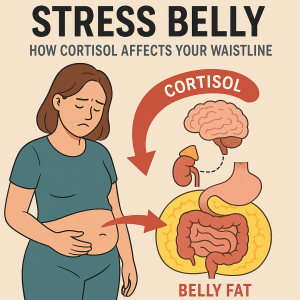
Cortisol increases appetite and signals your body to store energy — usually as abdominal fat, since this area has more cortisol receptors. This is why stressful periods often lead to increased cravings for sugary, high-fat foods and gradual belly growth.

The Role of Insulin and Blood Sugar

High cortisol raises blood sugar levels, which causes insulin spikes. When insulin remains high, your body can’t burn fat effectively, creating a cycle of stress → high blood sugar → more belly fat.

Sleep, Hunger, and Hormonal Imbalance

Chronic stress also affects hunger hormones:

  • Leptin (satiety) decreases → you feel less full.

  • Ghrelin (hunger) increases → you crave more food.

Combine that with poor sleep, and your body stores more fat than it burns.


Symptoms and Signs of a Stress Belly

Physical Indicators

  • A round, firm midsection even when the rest of your body is lean

  • Bloating and digestive discomfort

  • Fat that feels deeper and harder than typical subcutaneous fat

Behavioral and Emotional Indicators

  • Frequent stress or anxiety

  • Emotional eating or carb cravings

  • Fatigue, poor sleep, or mental fog

If this sounds familiar, cortisol may be influencing your waistline more than you realize.


Causes and Triggers of Elevated Cortisol

Chronic Work Stress

Modern life keeps us “switched on” 24/7 — emails, deadlines, notifications. This constant state of alertness keeps cortisol elevated all day.

Poor Sleep and Overstimulation

Exposure to blue light from screens and late-night caffeine can suppress melatonin, making it harder to sleep — and causing cortisol to spike overnight.

Poor Nutrition and Dieting Mistakes

Skipping meals, crash diets, or overeating sugar all stress your metabolism. When your body senses starvation or instability, it releases even more cortisol to preserve energy.


How to Reduce Cortisol and Lose a Stress Belly

Nutrition That Lowers Cortisol

  1. Eat balanced meals regularly — include protein, healthy fats, and complex carbs to keep blood sugar stable.

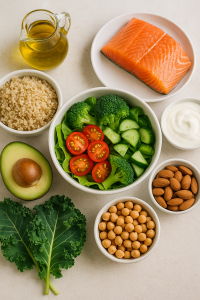
  2. Focus on anti-inflammatory foods like leafy greens, salmon, nuts, and olive oil.

  3. Cut down on caffeine and refined sugar, which overstimulate cortisol release.

  4. Stay hydrated — even mild dehydration raises cortisol.

👉 Try a cortisol-lowering breakfast: Greek yogurt, berries, chia seeds, and almonds.


Exercise That Helps (and Hurts)

  • Best: Walking, yoga, pilates, swimming, and strength training — all reduce cortisol while burning fat.

  • Avoid overtraining: Excessive cardio or HIIT can actually raise cortisol, especially in women over 40.
    Balance intense workouts with recovery days and deep breathing exercises.


Sleep, Mindfulness, and Stress Control

  1. Sleep 7–8 hours per night. Cortisol drops naturally during deep sleep.

  2. Practice mindfulness — even 10 minutes of meditation lowers cortisol levels.

  3. Unplug daily — reduce screen time and reconnect with nature.

  4. Deep breathing activates the parasympathetic system, signaling the body to relax.


Myths About Stress Belly and Cortisol

Myth Truth
“Cortisol only affects women.” Both men and women experience cortisol-related belly fat.
“Cutting calories is the best fix.” Severe restriction increases cortisol and slows metabolism.
“You can’t control cortisol naturally.” Lifestyle and diet changes can significantly reduce cortisol levels.
“Exercise always lowers stress.” Over-exercising can elevate cortisol and cause belly fat retention.

When to Seek Medical Help

If your belly fat is accompanied by chronic fatigue, irregular menstrual cycles, high blood pressure, or anxiety, you might have a cortisol imbalance or adrenal fatigue. Consult a doctor or endocrinologist for hormone testing (saliva or blood cortisol tests).


FAQs About Stress Belly

1. Can stress alone cause belly fat?
Yes, chronic stress elevates cortisol, which directly promotes abdominal fat storage.

2. How long does it take to lose a stress belly?
With consistent lifestyle changes, most people see improvement in 8–12 weeks.

3. Can yoga really reduce cortisol?
Yes — research shows yoga lowers cortisol levels and improves insulin sensitivity.

4. Are stress bellies permanent?
No. They are reversible through lifestyle, nutrition, and hormonal balance.

5. Is cortisol higher in the morning?
Yes. It peaks naturally early in the day to help you wake up, then declines by evening.

6. Can supplements help with stress belly?
Magnesium, omega-3s, and ashwagandha may help lower cortisol — but always consult a doctor first.


Conclusion: Balance Your Mind, Flatten Your Belly

A stress belly is your body’s way of saying it’s overwhelmed — not just physically, but hormonally. The key to flattening your belly isn’t another crash diet; it’s about restoring balance to your body and mind.

By managing cortisol through mindful nutrition, regular exercise, proper sleep, and stress control, you can reclaim your waistline — and your overall health.

👉 Learn more from Harvard Health: Understanding Stress and Hormones.

Why Belly Fat Is Harder to Lose After 40 (And How to Fix It Naturally)

Why Belly Fat Is Harder to Lose After 40

If you’ve noticed that belly fat sticks around more stubbornly after 40 — even with a healthy diet and regular workouts — you’re not imagining it. The truth is, losing belly fat after 40 becomes more difficult due to a combination of hormonal changes, slower metabolism, and lifestyle habits that work against your body’s natural rhythm.

But here’s the good news: once you understand what’s really happening inside your body, you can reverse these effects with the right strategy.


Understanding Belly Fat and Aging 

Why Belly Fat Is Harder to Lose After 40 (And How to Fix It Naturally)
Why Belly Fat Is Harder to Lose After 40

The Science of Fat Storage

Your body stores fat as a form of energy. However, where and how it stores fat changes as you age.
Before 40, most people can easily burn calories through a combination of muscle activity and hormonal balance. After 40, however, your body starts favoring fat storage over fat burning, particularly around the abdomen.

Why Age Matters in Fat Metabolism

As we get older, our metabolic rate drops by 5–10% per decade. This means that even if you eat the same foods and exercise the same way you did in your 30s, you may still gain weight — especially around your midsection.


Hormonal Shifts: The Hidden Cause Behind Belly Fat After 40

Hormones play a critical role in how your body stores fat. After 40, both men and women experience significant hormonal fluctuations that directly influence belly fat.

Declining Estrogen in Women

For women, estrogen naturally declines during perimenopause and menopause, causing fat to redistribute from the hips and thighs to the belly. This leads to the classic “menopause belly.”

Estrogen also regulates insulin sensitivity, so lower levels make it harder to metabolize glucose efficiently, leading to fat gain.

Testosterone and Muscle Loss in Men

Men experience a gradual decline in testosterone, which reduces muscle mass. Less muscle means a slower metabolism — and less calorie burning even at rest. The result? Increased abdominal fat and reduced energy.

Cortisol and Stress Weight Gain

High levels of cortisol, the stress hormone, trigger fat storage around the belly. Chronic stress from work, finances, or family responsibilities after 40 can lead to persistent cortisol spikes and stubborn fat accumulation.


Metabolism Slowdown: Why It Happens

Decrease in Lean Muscle Mass

After age 30, adults lose up to 5% of muscle mass per decade if they’re not strength training. Since muscle burns more calories than fat, less muscle equals a slower metabolism.

Fewer Calories Burned at Rest

Your basal metabolic rate (BMR) — the calories your body burns just to function — declines with age. So even if your activity level remains the same, you naturally burn fewer calories each day.


Insulin Resistance and Blood Sugar Changes

The Link Between Sugar, Insulin, and Fat

Over time, cells become less responsive to insulin, the hormone that helps regulate blood sugar. This condition, known as insulin resistance, leads to higher blood sugar levels — and your body compensates by storing more fat, particularly in the abdomen.

Warning Signs of Insulin Resistance

  • Constant fatigue

  • Sugar cravings

  • Increased belly circumference

  • Brain fog or difficulty concentrating

Early recognition and dietary adjustments can help prevent type 2 diabetes.


Lifestyle Habits That Make Belly Fat Harder to Lose

Poor Sleep and Circadian Rhythm Disruption

After 40, sleep quality often declines due to hormonal changes and stress. Poor sleep raises ghrelin (hunger hormone) and lowers leptin (satiety hormone), leading to overeating and fat storage.

Sedentary Behavior and Desk Jobs

Many people in their 40s have demanding, sedentary jobs. Sitting for long hours reduces calorie burn, weakens core muscles, and promotes fat storage around the belly.

Processed Foods and Late-Night Eating

Convenience foods, alcohol, and eating late in the evening disrupt digestion and blood sugar levels, encouraging visceral fat buildup.


How to Lose Belly Fat After 40: Proven Solutions 

How to Lose Belly Fat After 40: Proven Solutions 
How to Lose Belly Fat After 40: Proven Solutions

Nutrition for Hormonal Balance

A diet rich in whole foods, protein, and fiber helps balance hormones and stabilize blood sugar.
Focus on:

  • Leafy greens, salmon, eggs, nuts, and olive oil

  • Fiber-rich foods like lentils and oats to reduce insulin spikes

  • Cutting back on alcohol, sugar, and refined carbs

Exercise That Works After 40

  • Strength training: 3–4 times weekly to rebuild lost muscle.

  • HIIT (High-Intensity Interval Training): Improves fat oxidation and metabolism.

  • Walking, yoga, and swimming: Gentle yet effective for long-term fat loss.

Sleep, Stress, and Recovery

Sleep 7–8 hours nightly and practice stress management — meditation, breathing exercises, or spending time in nature all help lower cortisol.


Mindset Shift: From Quick Fixes to Sustainable Habits

Losing belly fat after 40 requires patience. Crash diets and excessive cardio don’t work long-term — they stress your hormones and slow your metabolism even more.

Instead, focus on small, consistent changes: daily movement, nutrient-rich meals, and positive self-talk. Progress may be slower, but it’s sustainable and lasting.


FAQs on Why Belly Fat Is Harder to Lose After 40

1. Is it normal to gain belly fat after 40?
Yes, hormonal and metabolic changes make belly fat more common, but it can be reversed with lifestyle adjustments.

2. Does menopause cause belly fat?
Yes. Lower estrogen levels after menopause redistribute fat toward the abdomen.

3. How long does it take to lose belly fat after 40?
With consistent effort, visible results often appear in 8–12 weeks.

4. What’s the best exercise for belly fat after 40?
A mix of strength training and HIIT yields the best long-term fat-burning results.

5. Can stress make belly fat worse?
Absolutely. Elevated cortisol promotes visceral fat storage.

6. Should I eat fewer calories after 40?
Yes — but smartly. Reduce portions while increasing protein and fiber to stay full and maintain muscle.


Conclusion: Aging Gracefully While Staying Fit

While belly fat is harder to lose after 40, it’s not impossible. The key lies in understanding how your hormones, metabolism, and lifestyle interact. With mindful eating, strength-based exercise, quality sleep, and stress reduction, you can flatten your belly, boost your energy, and age with confidence.

Remember — it’s not about chasing youth; it’s about building health that lasts.

👉 For more evidence-based insights, visit Harvard Health – Midlife Metabolism and Weight Management.

The Difference Between Subcutaneous and Visceral Fat Explained — Why It Matters for Your Health (2025 Guide)

The Difference Between Subcutaneous and Visceral Fat Explained

Body fat often gets a bad reputation, but not all fat is created equal. In fact, your body needs fat to function properly — it stores energy, supports hormones, and cushions vital organs. However, understanding the difference between subcutaneous and visceral fat is key to managing your health and reducing your risk of chronic disease.

Let’s break down what each type of fat is, how they differ, and what you can do to keep them in healthy balance.


Understanding Body Fat: More Than What You See

The Difference Between Subcutaneous and Visceral Fat Explained
The Difference Between Subcutaneous and Visceral Fat

Many people think of fat as just the soft tissue under the skin, but the human body stores fat in multiple layers — some visible, others hidden deep inside.

What Is Body Fat and Why Do We Need It?

Fat (adipose tissue) is essential for:

  • Energy storage: Fuel when your body runs low on calories.

  • Hormone production: Fat cells release estrogen, leptin, and adiponectin.

  • Insulation and protection: Cushions organs and regulates body temperature.

However, when fat accumulates excessively, especially around internal organs, it can lead to metabolic dysfunctions.


What Is Subcutaneous Fat?

Subcutaneous fat is the fat layer stored just beneath your skin — the soft, pinchable kind most people associate with body fat. It makes up about 90% of total body fat in most individuals.

Where Subcutaneous Fat Is Found

You’ll commonly find subcutaneous fat:

  • In the hips, thighs, and buttocks (especially in women)

  • Around the abdomen and arms (common in men)

  • On the face, chest, and back

Is Subcutaneous Fat Dangerous?

Subcutaneous fat is less harmful than visceral fat. It even plays a role in:

  • Regulating body temperature

  • Storing energy for later use

  • Producing beneficial hormones

However, excess subcutaneous fat can still cause issues like joint stress, insulin resistance, and self-esteem concerns.


What Is Visceral Fat?

The Difference Between Subcutaneous and Visceral Fat Explained
The Difference Between Subcutaneous and Visceral Fat

Visceral fat is the deeper, more dangerous kind. It’s stored inside your abdominal cavity, wrapping around vital organs like the liver, pancreas, and intestines.

Where Visceral Fat Is Stored

Unlike subcutaneous fat, visceral fat can’t be seen or pinched. It forms around internal organs and gives the belly a firm, protruding look — sometimes called “hard belly fat.”

Why Visceral Fat Is More Harmful

Visceral fat is metabolically active, meaning it releases inflammatory compounds and hormones that disrupt normal body functions.

Excess visceral fat is linked to:

  • Heart disease and stroke

  • Type 2 diabetes

  • High blood pressure

  • Insulin resistance

  • Hormonal imbalance

In short, visceral fat is not just about appearance — it’s a health risk.


Key Differences Between Subcutaneous and Visceral Fat

Feature Subcutaneous Fat Visceral Fat
Location Beneath the skin Around internal organs
Feel Soft and pinchable Hard and firm
Health Risk Moderate High (linked to chronic diseases)
Function Energy storage and insulation Protects organs but promotes inflammation when excessive
Measurement Skinfold test or BMI CT/MRI scans or waist circumference
Reduction Method Diet + exercise Diet, exercise, stress control, sleep improvement

How to Measure Subcutaneous and Visceral Fat

Waist-to-Hip Ratio and Belly Measurement

A simple way to estimate visceral fat is by measuring your waist circumference.

  • For women: Over 35 inches (88 cm) suggests high visceral fat.

  • For men: Over 40 inches (102 cm) indicates excess visceral fat.

Medical Imaging Tests

For precise measurement, healthcare professionals may use:

  • DEXA scans – show fat distribution.

  • CT or MRI scans – visualize internal visceral fat layers.


Causes of Excess Fat Accumulation

Hormones and Genetics

Hormones like estrogen, cortisol, and insulin play a significant role in fat distribution. Genetics also determine whether your body tends to store fat under the skin or deep inside the abdomen.

Lifestyle and Diet

A high-sugar diet, sedentary habits, chronic stress, and poor sleep increase both fat types, but especially visceral fat. Over time, this leads to metabolic syndrome and other health concerns.


How to Reduce Subcutaneous and Visceral Fat Safely

Dietary Changes for Fat Reduction

  1. Cut back on refined carbs and sugars.

  2. Add protein-rich foods (chicken, tofu, eggs) to boost metabolism.

  3. Eat more fiber, especially soluble fiber from oats, beans, and vegetables.

  4. Incorporate healthy fats like avocado, salmon, and olive oil.

Exercise That Targets Both Fat Types

  • Cardiovascular exercise (aerobics, cycling, brisk walking) burns visceral fat effectively.

  • Strength training builds lean muscle, boosting metabolism.

  • HIIT (High-Intensity Interval Training) delivers fast fat loss results.

Sleep, Stress, and Hormonal Balance

Chronic stress elevates cortisol, which promotes belly fat. Aim for:

  • 7–8 hours of quality sleep per night.

  • Regular mindfulness or yoga practice.

  • Balanced daily routines and reduced caffeine intake.


Myths About Fat Loss

Myth Reality
You can target belly fat with crunches Fat loss occurs body-wide, not in specific areas.
Thin people can’t have visceral fat Even slim individuals may store internal fat.
All body fat is bad Healthy levels of subcutaneous fat are essential.

FAQs on Subcutaneous and Visceral Fat

1. Which is worse — subcutaneous or visceral fat?
Visceral fat is more harmful because it surrounds vital organs and increases disease risk.

2. Can I have high visceral fat even if I’m thin?
Yes. This condition is called “TOFI” — thin outside, fat inside.

3. How do I know if I have visceral fat?
A growing waistline, fatigue, and bloating may signal visceral fat buildup; scans offer confirmation.

4. What’s the fastest way to lose visceral fat?
Combine a balanced diet, regular workouts, and consistent sleep.

5. Does age affect fat distribution?
Yes, aging slows metabolism and shifts fat toward the abdominal region.

6. Can hormones cause belly fat?
Hormonal imbalances (especially high cortisol and low estrogen) promote visceral fat storage.


Conclusion: Understanding Fat for Better Health

Knowing the difference between subcutaneous and visceral fat helps you focus on what truly matters — your internal health, not just external appearance.

While subcutaneous fat is mostly harmless, visceral fat requires immediate attention through proper nutrition, physical activity, and stress management.

Remember: the goal isn’t to eliminate fat — it’s to balance it. Your body thrives when hormones, lifestyle, and diet work together in harmony.

👉 For more in-depth insights, visit Harvard Health – Understanding Body Fat.

Hormonal Belly Fat in Women: What It Really Means & How to Fix It Naturally (2025 Guide)

Hormonal Belly Fat in Women: What It Really Means

Hormonal Belly Fat in Women: What It Really Means
Hormonal Belly Fat in Women

Many women struggle with belly fat that just won’t budge — no matter how healthy they eat or how much they exercise. The truth is, it’s not always about calories. Often, hormonal imbalance is the hidden culprit behind that stubborn midsection weight.

In this guide, we’ll explore what hormonal belly fat in women really means, why it happens, and how you can finally manage it through science-backed, holistic strategies.


Understanding Hormonal Belly Fat

Hormonal belly fat refers to abdominal fat accumulation caused by imbalances in key hormones such as estrogen, cortisol, insulin, and progesterone. These hormones influence how your body stores fat, manages stress, and regulates metabolism.

Unlike regular fat gain from overeating, hormonal belly fat can develop even when you’re maintaining a healthy diet and lifestyle — making it uniquely challenging for women.


The Science Behind Hormonal Weight Gain

Hormones are chemical messengers that control nearly every process in the body — including hunger, energy, and fat storage. When they fall out of balance, your body can start storing fat around your abdomen, even without extra calorie intake.

For instance:

  • Low estrogen shifts fat storage from hips to the belly.

  • High cortisol triggers fat storage during stress.

  • Insulin resistance prevents fat burning.

Understanding these hormonal players helps you tackle the root cause — not just the symptom.


Key Hormones That Influence Belly Fat in Women

Estrogen: The Feminine Fat Regulator

Estrogen levels fluctuate throughout a woman’s life — especially during perimenopause and menopause. Low estrogen levels encourage fat to relocate from the hips and thighs to the abdomen, leading to the classic “menopause belly.”

Maintaining estrogen balance through plant-based phytoestrogens (like flaxseeds and soy) and strength training can help reduce this effect.


Cortisol: The Stress-Induced Fat Hormone

Chronic stress triggers the release of cortisol, your body’s fight-or-flight hormone. High cortisol increases appetite and cravings for high-sugar, high-fat foods while promoting visceral fat — the dangerous kind that surrounds your organs.

Mindfulness, yoga, deep breathing, and adequate sleep can naturally lower cortisol levels.


Insulin: The Blood Sugar and Fat Storage Connection

Insulin helps move glucose into your cells for energy. However, frequent spikes from refined carbs and sugary foods lead to insulin resistance, which traps fat — especially around your belly.

Balancing insulin involves lowering sugar intake, eating fiber-rich meals, and engaging in regular physical activity.


Leptin and Ghrelin: Hunger and Satiety Hormones

Leptin tells your brain when you’re full, while ghrelin signals hunger. Poor sleep, stress, and overeating disrupt these hormones, leading to constant hunger and belly fat accumulation.
Improving sleep and eating high-protein breakfasts help regulate both.


Signs You Have Hormonal Belly Fat

Physical Symptoms

  • A rounder, firmer belly that persists even with diet and exercise.

  • Bloating or puffiness around the midsection.

  • Weight gain mainly around the waist despite stable weight elsewhere.

Emotional and Behavioral Clues

  • Mood swings and irritability.

  • Fatigue and disrupted sleep.

  • Sugar cravings or increased appetite.

If these symptoms sound familiar, it’s worth discussing hormone testing with a healthcare professional.


Common Triggers of Hormonal Belly Fat

Menopause and Hormonal Transition

During menopause, estrogen drops dramatically, slowing metabolism and altering where fat is stored. This transition is one of the leading causes of hormonal belly fat in women over 40.

Stress and Cortisol Overload

Long-term stress doesn’t just affect your mind — it physically changes your waistline. Chronic cortisol elevation signals your body to conserve fat around the belly.

Poor Sleep and Hormone Imbalance

Sleep is when your body resets hormonal balance. Lack of quality rest increases ghrelin (hunger) and lowers leptin (fullness), driving overeating.

Birth Control and Hormonal Medications

Certain oral contraceptives or hormone therapies can alter your body’s natural estrogen and progesterone balance, sometimes leading to increased abdominal fat.


How to Lose Hormonal Belly Fat Naturally

Nutrition Strategies That Work

Hormonal Belly Fat in Women: What It Really Means
Hormonal Belly Fat in Women
  1. Eat balanced meals with lean protein, healthy fats, and complex carbs.

  2. Avoid refined sugars and alcohol to stabilize insulin levels.

  3. Increase fiber intake — especially soluble fiber from oats, flaxseed, and beans.

  4. Include omega-3 fats (salmon, chia seeds) to reduce inflammation.

The Role of Exercise and Movement

  • Strength training increases muscle and boosts metabolism.

  • HIIT workouts improve insulin sensitivity and burn fat faster.

  • Walking and yoga lower cortisol levels naturally.

Stress Management and Mindfulness

Try deep breathing, journaling, or meditation for 10 minutes daily. Consistency is key to rebalancing your hormonal rhythm.


Medical Approaches and When to Seek Help

Functional Medicine Testing

Ask your doctor about testing levels of:

  • Estrogen and progesterone

  • Cortisol (via saliva or urine tests)

  • Insulin and glucose levels

  • Thyroid hormones

Medical Treatments and Lifestyle Integration

If your hormones are significantly off balance, treatments may include bioidentical hormone therapy, dietary adjustments, or stress-focused therapies under medical supervision.


Myths About Hormonal Belly Fat

Myth Truth
It’s just from overeating Hormones can cause fat storage even with a clean diet.
Menopause belly is inevitable Lifestyle changes can reverse fat gain.
Crunches will burn belly fat Fat loss happens through full-body metabolism, not spot reduction.

FAQs on Hormonal Belly Fat in Women

1. Can hormonal belly fat go away naturally?
Yes, with hormone-balancing nutrition, stress control, and regular movement, many women successfully reduce it naturally.

2. Does estrogen replacement help?
For some postmenopausal women, supervised hormone therapy may assist, but it must be done under medical advice.

3. How long does it take to lose hormonal belly fat?
Most women notice improvement within 8–12 weeks of consistent lifestyle changes.

4. Can stress alone cause belly fat?
Yes, chronic cortisol elevation directly promotes visceral fat storage.

5. What’s the best diet for hormonal belly fat?
A low-sugar, high-protein, whole-food diet supports insulin balance and fat metabolism.

6. Should I see a doctor for hormonal belly fat?
Yes, especially if weight gain is sudden or accompanied by fatigue, mood changes, or menstrual irregularities.


Conclusion: Balancing Hormones, Regaining Confidence

Hormonal belly fat in women isn’t just a cosmetic issue — it’s a message from your body that your hormones need attention. By focusing on balanced nutrition, regular movement, and stress management, you can restore harmony within your body and reclaim your health.

Remember: The key isn’t restriction — it’s balance.

👉 Explore science-backed hormone resources from Harvard Health to continue your journey.

What Causes Belly Fat in Women? 5 Shocking Reasons & Proven Fixes for 2025


What Causes Belly Fat in Women? The 5 Biggest Reasons

Belly fat is one of the most frustrating problems many women face. Even with dieting and workouts, that stubborn abdominal bulge can refuse to go away. But what causes belly fat in women isn’t just about calories — it’s about a complex mix of hormones, lifestyle, genetics, and mental health.

What Causes Belly Fat in Women? The 5 Biggest Reasons
What Causes Belly Fat in Women

In this article, we’ll uncover the five biggest reasons why belly fat builds up in women and how to take charge of it effectively in 2025.


Understanding Belly Fat in Women

Belly fat, also known as abdominal or visceral fat, refers to fat stored around your waist and internal organs. While some fat is necessary to cushion organs and regulate hormones, excess visceral fat can increase your risk of diabetes, heart disease, and hormonal imbalance.

There are two main types:

  • Subcutaneous fat – stored just beneath the skin.

  • Visceral fat – surrounds internal organs and affects metabolism.

Women are naturally prone to storing fat in the hips, thighs, and belly due to estrogen-driven fat distribution — but after menopause, that balance shifts dramatically.


Why Belly Fat is Different for Women

Women’s bodies are hormonally dynamic. Estrogen helps control where fat is stored, typically keeping it away from the midsection before menopause. However, when estrogen levels drop, fat tends to accumulate around the abdomen.

Moreover, social stress, childbirth, and hormonal birth control can all influence belly fat storage differently in women compared to men.


Reason #1: Hormonal Changes and Imbalance

Hormones are perhaps the biggest drivers of belly fat accumulation in women. When estrogen, progesterone, and cortisol fluctuate, the body tends to store fat more easily — especially in the belly.

The Role of Estrogen in Fat Distribution

Estrogen helps regulate fat metabolism. During reproductive years, it promotes fat storage in the hips and thighs. But after menopause, lower estrogen levels shift storage toward the belly, resulting in the so-called “menopause belly.”

Cortisol: The Stress Hormone Behind Belly Fat

Cortisol, released during chronic stress, increases appetite and causes the body to store fat in the abdominal area. High cortisol levels can make you crave sugary and fatty foods — creating a vicious cycle of weight gain and stress.


Reason #2: Poor Diet and Nutrient Deficiencies

A diet high in processed foods, added sugars, and refined carbs contributes heavily to belly fat. These foods spike insulin levels, which encourages fat storage in the midsection.

How Sugar and Carbs Trigger Belly Fat

Excess sugar converts to fat through a process called lipogenesis. Moreover, high-carb diets elevate insulin, which signals the body to store energy rather than burn it.

Nutritional Habits That Reduce Belly Fat

  • Choose whole grains, lean proteins, and fiber-rich vegetables.

  • Limit sugary beverages and alcohol.

  • Include foods rich in magnesium, omega-3s, and antioxidants to stabilize hormones.


Reason #3: Sedentary Lifestyle and Lack of Exercise

Sitting for long hours — whether at a desk job or on the couch — significantly slows your metabolism.

The Science Behind “Sitting Disease”

Prolonged inactivity reduces lipoprotein lipase activity, an enzyme critical for breaking down fat. Over time, it contributes to visceral fat buildup even if your weight doesn’t change much.

Effective Exercises to Burn Belly Fat

  • Cardio Workouts – like brisk walking, cycling, or swimming.

  • HIIT (High-Intensity Interval Training) – boosts metabolism post-workout.

  • Strength Training – builds lean muscle, helping burn more fat even at rest.


Reason #4: Stress, Sleep, and Mental Health

Chronic stress and poor sleep go hand in hand with belly fat. When your body doesn’t rest enough, your metabolism and appetite-regulating hormones go haywire.

How Poor Sleep Affects Metabolism

Inadequate sleep increases ghrelin (hunger hormone) and decreases leptin (satiety hormone), leading to overeating. This imbalance encourages the accumulation of belly fat.

Mindfulness and Stress Management

Meditation, deep breathing, journaling, and spending time outdoors all help reduce stress and stabilize cortisol levels.


Reason #5: Age, Genetics, and Metabolic Slowdown

Why Age Slows Down Fat Burn

As women age, muscle mass decreases and metabolism slows down, making it harder to burn calories efficiently.

Genetic Predisposition to Belly Fat

Some women inherit genes that favor fat storage around the waist. While genetics can’t be changed, lifestyle factors can significantly reduce their impact.


How to Reverse Belly Fat Safely

A sustainable, healthy approach includes:

  • Balanced nutrition with plenty of lean protein, healthy fats, and complex carbs.

  • Hydration — water helps metabolize stored fat.

  • Consistent exercise, combining cardio, strength, and flexibility training.

  • Stress management and adequate sleep hygiene.


Common Myths About Belly Fat

Myth Truth
You can spot-reduce belly fat Fat loss happens throughout the body, not in one area.
Crunches alone can burn belly fat Cardio and full-body strength training are more effective.
Skipping meals helps reduce fat It slows metabolism and triggers overeating later.

When to Seek Medical Help

If you notice sudden weight gain around the belly despite a healthy lifestyle, consult a doctor. Conditions like PCOS, hypothyroidism, and insulin resistance could be involved.


FAQs on What Causes Belly Fat in Women

1️⃣ Does menopause cause belly fat?
Yes. The drop in estrogen after menopause redistributes fat from hips to the abdomen.

2️⃣ Can stress alone cause belly fat?
Chronic stress raises cortisol, which increases fat storage in the belly.

3️⃣ What’s the fastest way to reduce belly fat?
Combine clean eating, consistent exercise, and good sleep — no shortcuts.

4️⃣ Are certain foods linked to belly fat?
Yes — processed foods, sugar, and alcohol are major contributors.

5️⃣ Can belly fat affect hormones?
Yes. Excess fat produces estrogen and inflammatory compounds, worsening imbalance.

6️⃣ How long does it take to lose belly fat naturally?
With consistency, most women see noticeable changes within 8–12 weeks.


Conclusion: Taking Charge of Your Health

Understanding what causes belly fat in women empowers you to take meaningful action. It’s not just about vanity — it’s about overall health, energy, and confidence. By managing your hormones, improving nutrition, moving more, and reducing stress, you can reclaim your body and vitality at any age.

👉 For a science-backed guide to hormonal health, visit Harvard Health’s Women’s Wellness Resource.

error: Content is protected !!