
10 Proven Lower Belly Floor Exercises for Strength, Balance & Core Stability
Your lower belly and pelvic floor muscles play a huge role in how you move, stand, balance, and breathe. When these muscles weaken, everyday tasks like standing upright, bending, and even walking can feel harder than they should. This is why lower belly floor exercises are so important. They target the deep stabilizing muscles of the abdomen and pelvic region—muscles that often go neglected during traditional ab workouts.
In this guide, you’ll learn exactly why lower belly floor exercises matter, how to perform them safely, and the 10 best moves for building long-lasting strength and stability.
Understanding Lower Belly Floor Exercises
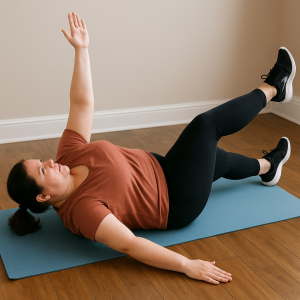
What the Lower Belly Floor Muscles Do
The lower belly region includes the deep core muscles—the transverse abdominis, lower rectus abdominis, and internal obliques—along with the pelvic floor. These muscles control stability and support the spine and hips.
Signs of Weak Lower Belly Floor Muscles
You may need lower belly floor exercises if you notice:
-
Slouching or difficulty sitting upright
-
Lower back tension
-
Weak pelvic control
-
Poor core engagement
-
Trouble balancing
-
Bloating or abdominal bulging during exercise
These symptoms are extremely common and very treatable with proper training.
Why These Exercises Matter for All Ages
Whether you’re 20, 40, or 60+, strengthening the lower belly floor is essential for:
-
Comfortable movement
-
Injury prevention
-
Pelvic stability
-
Better athletic performance
-
Long-term core health
Benefits of Lower Belly Floor Exercises
Improved Core Stability
These exercises strengthen your deep internal core system—the foundation for every movement.
Better Posture & Spinal Support
Strong lower belly muscles help lengthen the spine, keeping posture upright and pain-free.
Reduced Lower Back Pain
Many lower back problems come from underactive core muscles. Training them helps relieve discomfort.
Increased Pelvic Stability
This improves bladder control, supports daily activities, and helps protect the hips.
How to Perform Lower Belly Floor Exercises Correctly
Proper Breathing Technique
Correct breathing is essential:
-
Inhale through the nose
-
Exhale slowly while drawing the belly inward
-
Maintain gentle tension, not strain
Form Tips for Beginners
-
Keep the lower back flat
-
Move slowly, never rushing
-
Focus on controlled activation
-
Stop if pain occurs
Common Mistakes to Avoid
-
Overarching the back
-
Holding your breath
-
Using momentum instead of muscle control
-
Going too fast
10 Best Lower Belly Floor Exercises
1. Pelvic Tilt Activation
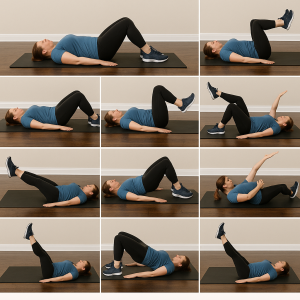
Lie on your back, gently tilt your pelvis upward, and engage your lower belly muscles. Hold for 5 seconds.
2. Lower Abdominal Brace
Breathe out and draw your lower stomach inward while keeping the spine neutral. Hold 10–15 seconds.
3. Toe Taps
Lift your legs to a tabletop position and gently tap one foot to the floor, alternating sides.
4. Heel Slides
Slide one heel forward while keeping the belly flattened, then return. Switch legs.
5. Supine Marching
March your legs upward in slow, controlled movements while keeping your core tight.
6. Dead Bug Hold
Extend opposite arm and leg while keeping the belly pulled inward. Great for deep core activation.
7. Elevated Leg Hold
Lift legs slightly off the floor while pressing the lower back down. Hold 10–20 seconds.
8. Glute Bridge with Lower Belly Engagement
Lift hips upward while squeezing the glutes and activating the lower belly at the top.
9. Controlled Leg Drop
Lower one leg slowly toward the floor while keeping your back flat.
10. Pelvic Floor Lift (Kegel Integration)
This integrates controlled pelvic contraction with deep belly breathing for full lower floor engagement.
Weekly Beginner-to-Advanced Training Routine
Easy Beginner Routine
-
Pelvic tilt – 10 reps
-
Heel slides – 10 reps
-
Toe taps – 10 per side
-
Abdominal bracing – 3 sets, 10 sec each
Intermediate 20-Min Routine
-
Dead bug – 12 reps
-
Supine marching – 15 reps
-
Controlled leg drops – 10 per side
-
Glute bridge – 15 reps
Advanced Strength Circuit
-
Leg hold – 20 seconds
-
Toe tap extensions – 12 reps
-
Bridge with single-leg lift – 10 each
-
Dead bug slow hold – 10 reps
Lifestyle Factors That Support Lower Belly Strength
Posture Habits
Sit tall with the core slightly engaged throughout the day.
Nutrition & Hydration
Stable digestion and hydration improve abdominal muscle performance.
Daily Movement Tips
Walking, stretching, and gentle rotation help keep the core active between workouts.
FAQs About Lower Belly Floor Exercises
1️⃣ How often should I do lower belly floor exercises?
3–4 times weekly is ideal for noticeable improvement.
2️⃣ Can these exercises help with lower back pain?
Yes—strengthening the deep core often reduces lower-back discomfort.
3️⃣ Are these safe for beginners?
Absolutely. Start slow and progress gradually.
4️⃣ Can I combine these with regular ab workouts?
Yes, but always do deep core work first for better activation.
5️⃣ Will these exercises flatten my stomach?
They strengthen and tighten the lower belly, but diet also plays a role.
6️⃣ Are pelvic floor lifts necessary?
They enhance stability and are beneficial for most adults.
Conclusion
Lower belly floor exercises are one of the most effective ways to build a strong, balanced, and stable core. By training these deep muscles, you support your posture, protect your back, and improve everyday movement. Start slowly, engage your breath, and be consistent—your body will thank you.